Table of Contents – Free Online Piano Lessons


Welcome to Zebra Keys’ blog! We provide free online piano lessons for those who want to learn how to play the piano at their own pace. These online lessons are free of charge, and comes with music tools that can help you to learn to play the piano. Below is the Table of Contents for our lessons:
 
Piano Basics


Lesson 1Patterns of Piano Keys
 
Lesson 2Names of White Keys
 
White Key Names
 
Black Key Names
 
Lesson 3Names of Black Keys
 
Lesson 4Piano Grand Staff
 
Lesson 5Music Notation: Note Durations
 
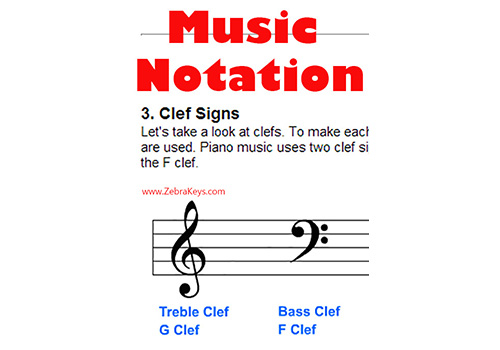
Music Notation.20


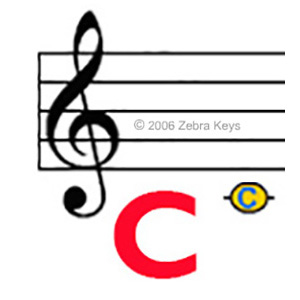
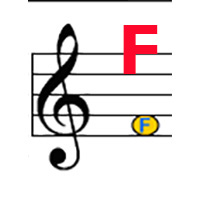
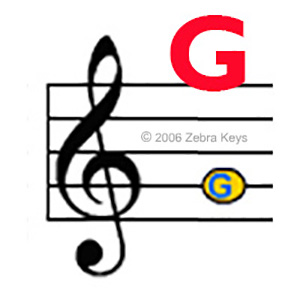
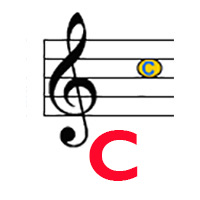
=1. Treble C Middle.2_300.2 Treble F label =5. Treble G label_300.2
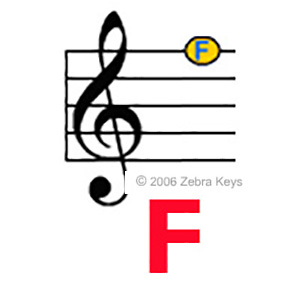
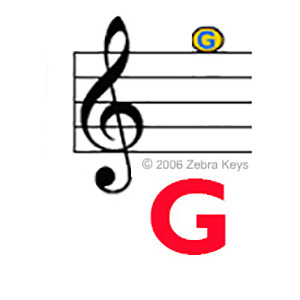
Treble C hi label =11. Treble F hi label_300.2 =12. Treble G hi label_300.2


Beginner Piano 
Beginner Piano – Learn Songs
 
Lesson 6 – Learn Song, “Brother John”
 
Lesson 7London Bridge is Falling Down
 
Lesson 8Twinkle Twinkle Little Star


Five-Finger Exercise

 
Five Finger Exercises
 

Learn how to do Five Finger Exercise to improve the strength of your fingers. This is an excellent piano technique for beginners.
 
You can also practice Read the rest of this entry »

Learn to Play “Brother John” Online


Learn Brother John


Learn how to play this popular nursery rhyme, Brother John. Access the written version of this Free piano lesson, comes with fun Flash demos.
 
Let’s start now:
 
This song is played in 4/4 time, which means each measure has four (4) beats, and each beat (count) receives a quarter note. [Review: Music Notation]

Read the rest of this entry »

Piano Layout – Black Keys


Piano_Lesson_3_200


Access free Virtual Piano List of 50 Free Piano Lessons Free Interactive Keyboard Trainer


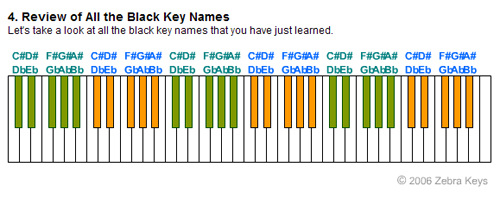
Learn the layout of piano black keys. There are five black keys in total, you can see a group of two black keys and a group of three black keys across any piano or keyboard.
 
The first group is a group of two (2) black keys with 3 white keys surrounded them are – Db, Eb
The second group is a group of three (3) black keys with 4 white keys surrounded them, are – Gb, Ab, Bb
 
Each of these black keys has two names: 
 

        Db (D flat), or C# (C sharp)
        Eb (E flat), or D# (D sharp)
        _______________________
        Gb (G flat), or F# (F sharp)
        Ab (A flat), or G# (G sharp)
        Bb (B flat), or A# (A sharp)


Read the rest of this entry »

Fur Elise

 
Fur_Elise_Zebrakeys
 

Fur Elise was written by Ludwig Beethoven in 1810. This classical piece is one of the most famous piano music during the late 18th to early 19th centuries.
 
 
Watch these videos showing you how to play Fur Elise, the last video is played at 50% speed. Read the rest of this entry »

Learn how to play “We’ve Only Just Begun” on piano keyboard

Below is a video tutorial for “We’ve Only Just Begun”:

How to play “You Light Up My Life”

Learn how to play the song, “You Light Up My Life” on the piano keyboard in the video below:

Learn easy piano song “Home On The Range” for beginners

;

Learn how to play an easy song, “Home On The Range” on the piano keyboard.

Lyrics

Oh, give me a home where the buffalo roam,
Where the deer and the antelope play,
Where seldom is heard a discouraging word
And the skies are not cloudy all day.

Chorus:
Home, home on the range,
Where the deer and the antelope play;
Where seldom is heard a discouraging word
And the skies are not cloudy all day.

Where the air is so pure, the zephyrs so free,
The breezes so balmy and light,
That I would not exchange my home on the range
For all of the cities so bright.

Chorus

The red man was pressed from this part of the West
He’s likely no more to return,
To the banks of Red River where seldom if ever
Their flickering camp-fires burn.

How to play song “The Snake Dance”

Learn how to play “The Snake Dance” music below:

Over The Rainbow piano music

“Over The Rainbow” is one of the most famous and beloved songs of the 20th century. It was written for the 1939 film The Wizard of Oz.

The music was composed by Harold Arlen, Read the rest of this entry »

How to play easy piano song for children: Row Your Boat

Learn how to play easy children song, “Row, Row, Row Your Boat” with just one hand, free sheet music also provided. As a traditional folk song, “Row, Row, Row Your Boat” doesn’t have a single known composer or a precise date of creation, but it has become an enduring part of children’s musical culture.

The exact origin of “Row, Row, Row Your Boat” is unclear, and there is no definitive record of who created the song or the exact year it was first published. It is considered a traditional English nursery rhyme, and like many folk songs, it has evolved over time through oral transmission.


The song first appeared in print in the 19th century, though its origins may date back even earlier. One of the first known published versions appeared in the 1850s, in a collection called “The Nursery Rhymes of England” by James Orchard Halliwell. The song has since become a staple of children’s music around the world.

Here’s a simple version of the melody for “Row, Row, Row Your Boat” using note names, assuming you’re in the key of C major. The song is often sung in a 4/4 time signature.

Notes:

C C C C
Row, row, row your boat,

E D C C
Gently down the stream.

C C C C
Merrily, merrily, merrily, merrily,

E D C C
Life is but a dream.


Each note represents a syllable of the song. This version is simple and can be played on piano, xylophone, or other melody instruments. You can also adjust the key or notes to suit different instruments or preferences!

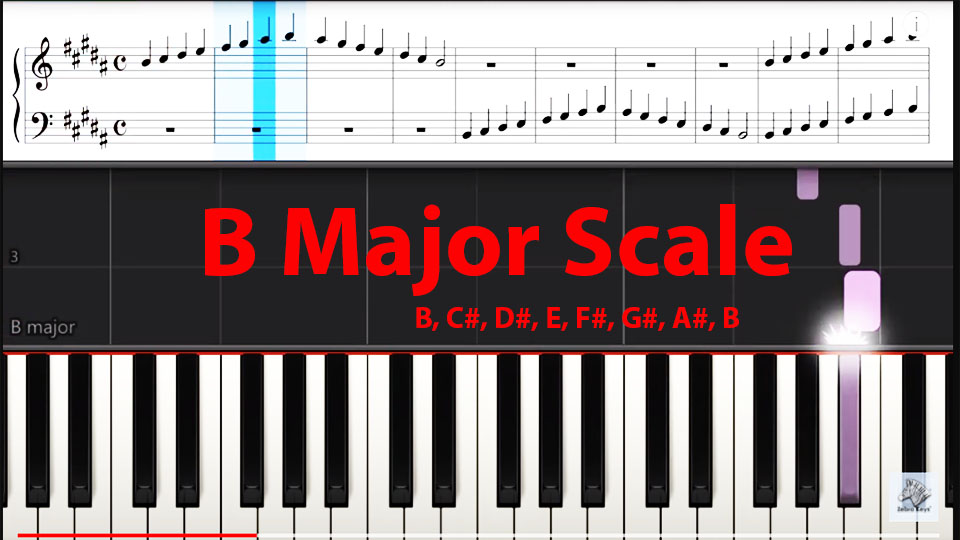
How to practice “B Major Scale” with fingerings instruction

 
B_Major_Scale_arranged_by_Zebrakeys.2


Below is the video showing how to practice playing “B Major Scale” with fingerings instruction for both hand. You can start by practicing the right-hand fingerings first, and then with your left hand.

Read the rest of this entry »

Bagatelle No. 25 in A minor (Fur Elise)


Beethoven’s “Für Elise” is one of his most famous piano pieces. It was composed in 1810 but wasn’t published until 1867, long after Beethoven’s death. The piece is also called Bagatelle No. 25 in A minor, and it’s known for its catchy, simple melody.


  Read the rest of this entry »

Chopin’s Fantasie Impromptu

 
20250407_134747
 

Frédéric Chopin’s Fantasie Impromptu in C-sharp minor, Op. 66, is one of his most popular and virtuosic piano compositions. Composed in 1834 but published posthumously in 1855, the piece is characterized by its contrasting sections, blending lyrical, expressive Read the rest of this entry »

How to practice D Major Scale on piano


Learn how to practice D Major Scale on piano keyboard


______________________________
More Free Read the rest of this entry »

Chopin – Minuet Waltz Op.64 No.1


chopin_minute_waltz_op64_no1.Zebrakeys.10.3


Chopin’s “Minuet Waltz” Op. 64 No. 1, often referred to as the *Waltz in D-flat major*, is one of the composer’s most charming and elegant works. Composed in 1847, this waltz combines Read the rest of this entry »

Learn how to count “1/4 notes”, “dotted 1/4 notes”, and “1/8 notes” in Hark The Herald Angels Sing


Learn how to play the easy melody of Hark! The Herald Angels Sing. This song is played in 4/4 time, meaning that there are four beats in a measure, and each beats gets a quarter (1/4 note).
 
The melody of this song is played by the right hand –


| G C C B | C E E D | G G G F |
| E D E | A D D C 1 | C E E D |
| G D D B | B A G | G G G C |
| F E E D | G G G C | F E E D |
| A A A G | F E F | D EF G C |
| C D E | A A A G | F E F |
| D EF G | C D C |


In the first measure, “G C C B” 
G gets a “1/4 note”; Read the rest of this entry »

Easy Song Played in 4/4 Time


Songs played in 4/4 time mean there are 4 beats per measure, and each beat gets a quarter note. Watch this easy song played in “4/4 time” and learn how to count the quarter notes (1/4 notes) and the half notes (1/2 notes) as well.
 
[Review: Music note durations chart below]


Song played in the Key of C


Learn how to play Deck The Halls in the key of C in this blog. A song written in the key of C means that the song primarily uses the notes of the C major scale. The key of C major is one of the most common and easiest keys to work with, especially for beginners, because it contains no sharps or flats. The notes in the C major scale are:
 
**C, D, E, F, G, A, B**
 
In the key of C, the **C major chord** (C-E-G) is typically the Read the rest of this entry »

How to count “quarter notes” in music


How to count quarter notes in music, let’s watch the video below:


Also, here is the full lesson of how to count other notes:
  Read the rest of this entry »